Katoomba Area Local NewsStrengthening community, healing Country, and restoring the health of our planet.
Future Doctors Learn About Planetary Health
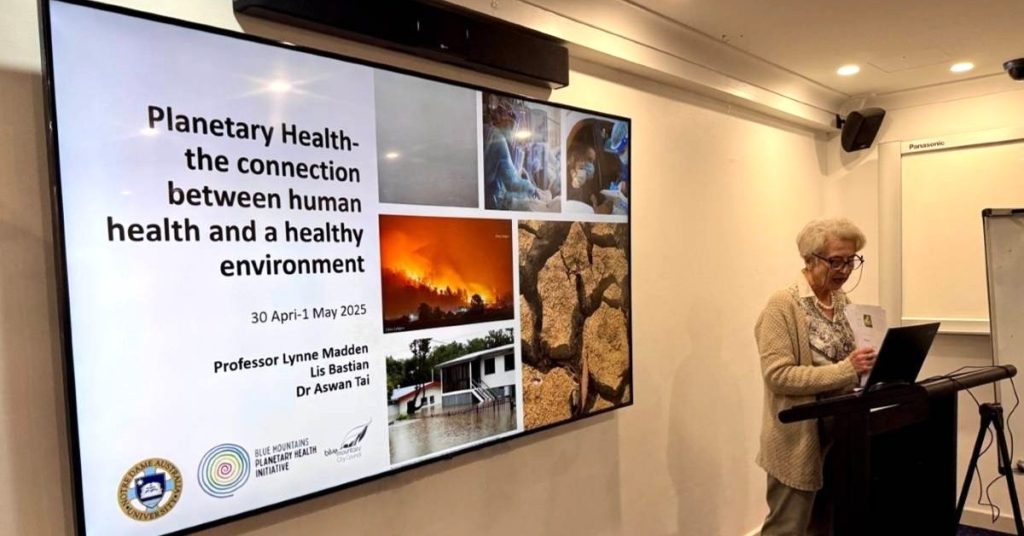
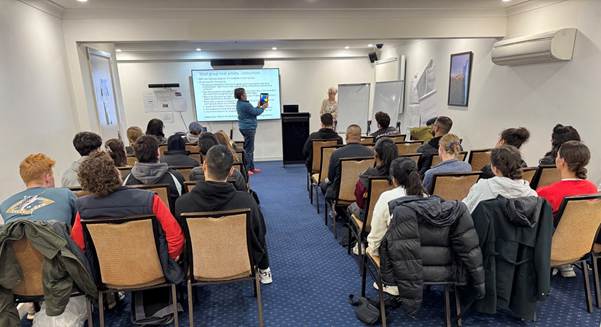
Professor Lynne Madden from The University of Notre Dame presenting on the connection between human health and a healthy environment.
Last week around 160 first year medical students were introduced to Planetary Health and Dharug culture at the Planetary Health Centre, with presentations by Professor Lynne Madden from The University of Notre Dame Australia, Lis Bastian from the Planetary Health Centre and Dharug man Chris Tobin.
Key Points:
The Rural Clinical School of The University of Notre Dame in Lithgow and the Blue Mountains Planetary Health Centre have been introducing first year medical students to rural medicine, Aboriginal Health and Planetary Health for three years.
In Australia, heatwaves kill more people than all other natural disasters combined, and we need a whole-of-community response to reduce the impact of heat on public health and biodiversity.
A healthy biodiverse environment supports human health.
Increasingly, medical practitioners are recognising the impact of the environment on human health and that we need to protect the health of our planet to safeguard human health.
For the last three years, The University of Notre Dame Australia has been bringing first year medical students to the Blue Mountains Planetary Health Centre and Notre Dame’s Rural Clinical School in Lithgow, to deliver its Rural Indigenous Immersion Program.
The focus is on rural medicine, Aboriginal Health and Planetary Health.
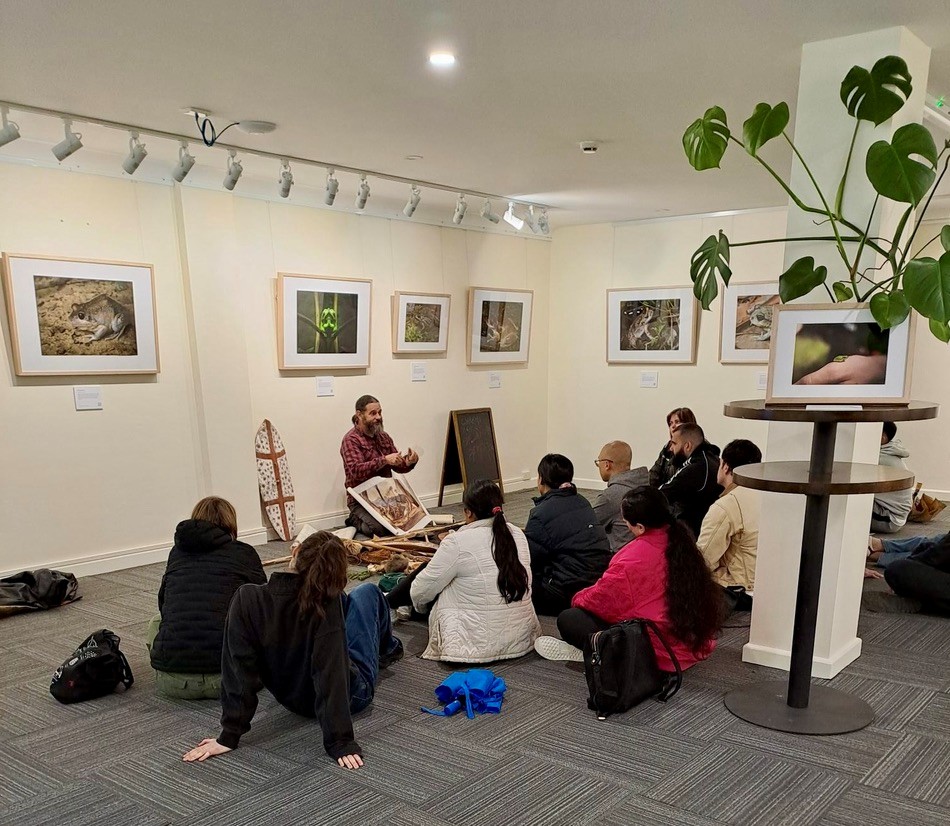
Chris Tobin discussing Dharug culture with medical students in the Planetary Health Centre Gallery
Last week around 160 students were introduced to Planetary Health and Dharug culture at the Planetary Health Centre, with presentations by Dharug man Chris Tobin, Professor Lynne Madden from Notre Dame, and Lis Bastian from the Planetary Health Centre.
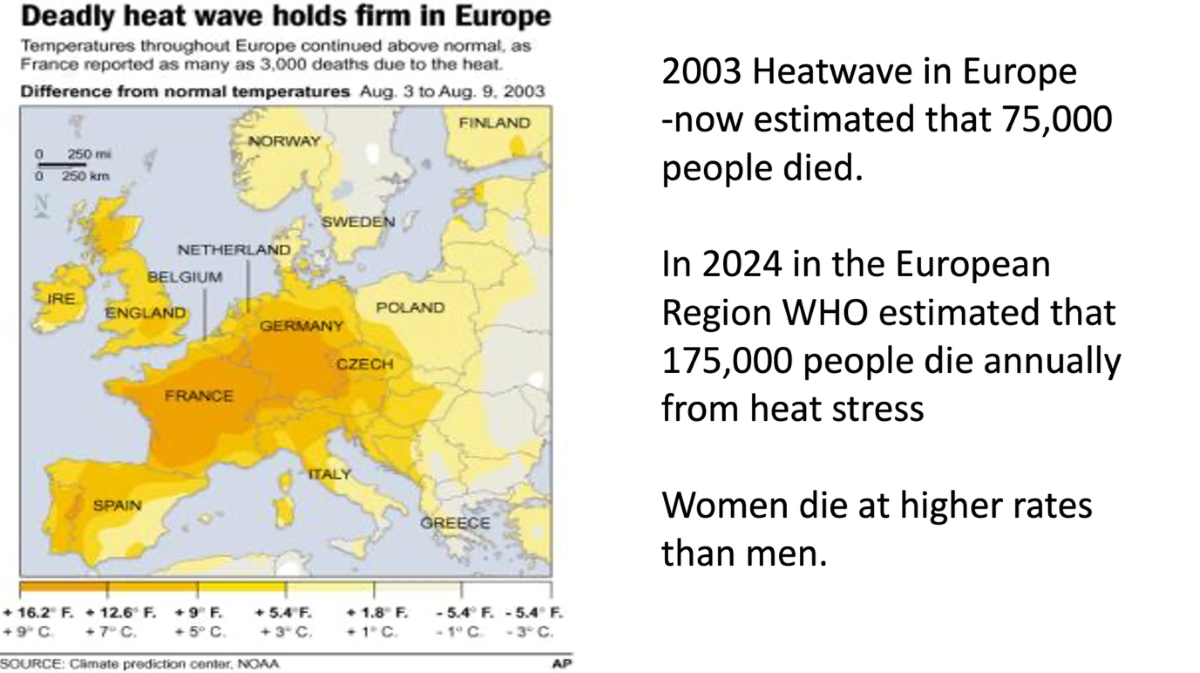
A slide from Professor Madden’s presentation
With 2024 being the hottest year on record, within the hottest decade on record, assisting future doctors prepare for heatwaves has become an important focus area of these programs. Heat waves kill more people than all other natural disasters combined. For example, in 2024 the WHO estimated that 175,000 people die annually from heat stress in the European region.
“They are all preventable deaths,” stressed Professor Madden. “You can prevent unnecessary morbidity and mortality if you’re aware. Some drugs you are going to prescribe,” she explained to the students, “are going to make people more heat sensitive. You’re going to have to be factoring this into your care.”
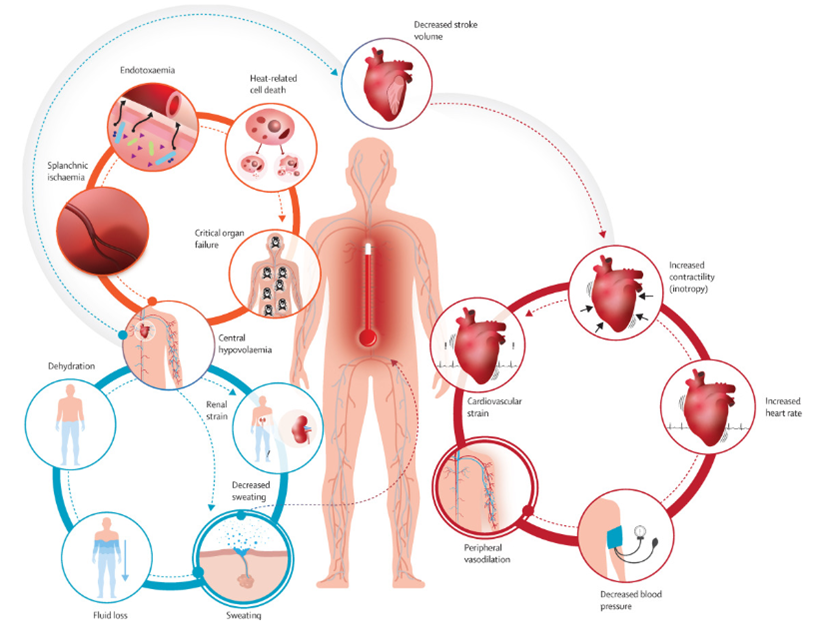
Professor Lynne Madden highlighted that a large section of the population, that includes babies, pregnant women, people on certain medications (including some anti-hypertensives), and people over 65, are more vulnerable to the effects of heatwaves because of a reduced capacity to thermoregulate.
“We actually know a lot more now about the physiology of thermoregulation. And some of that work has been done at Sydney University by Professor Ollie Jay, Professor of Heat and Health. Anything that Ollie writes is worth reading,” said Lynne.
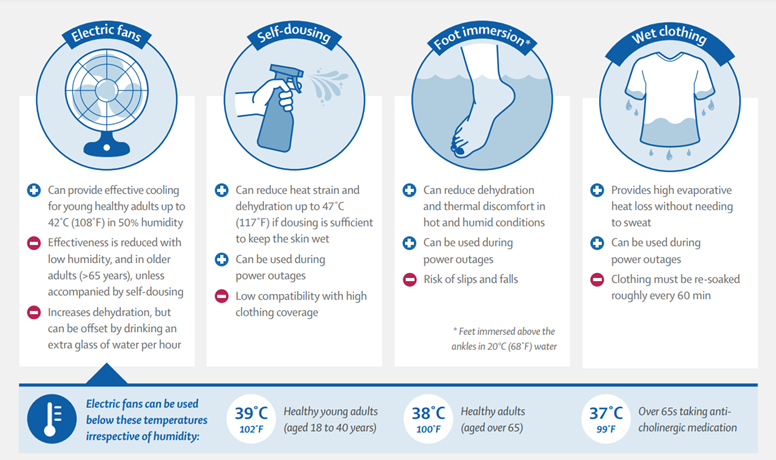
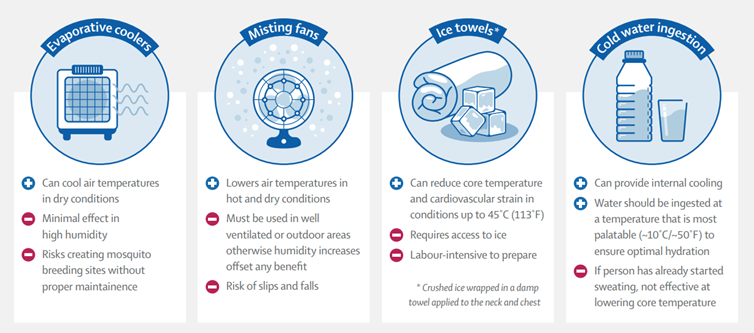
Professor Madden shared these simple evidence-informed solutions to help people cope with heatwaves:
Jay O, Capon A, Berry P, et al. Reducing the health effects of hot weather and heat extremes: from personal cooling strategies to green cities. The Lancet 2021.
You can watch Professor Madden’s full presentation here:
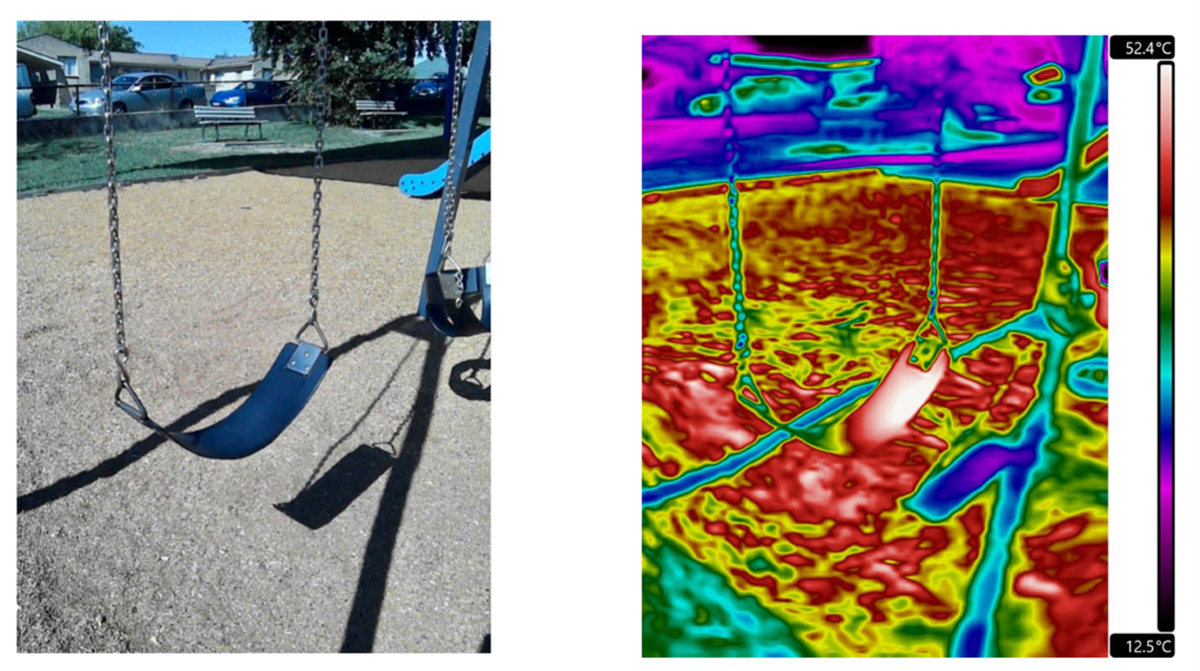
Through Lis Bastian’s presentation, and group exercises using thermal imaging cameras, the students learnt how surface temperatures can be dramatically higher than air temperatures (think about when you try walking barefoot on an asphalt road on a hot day!) and that a strategy to reduce impacts of heatwaves, and the ‘heat island effect’, is to ensure we use more natural surfaces which contain water.
Water cools areas in summer and warms them in winter. Grass, for example, is much cooler than pavers and woodchip or artificial surfaces. Colour is also important: light roofs and surfaces are cooler than dark surfaces.
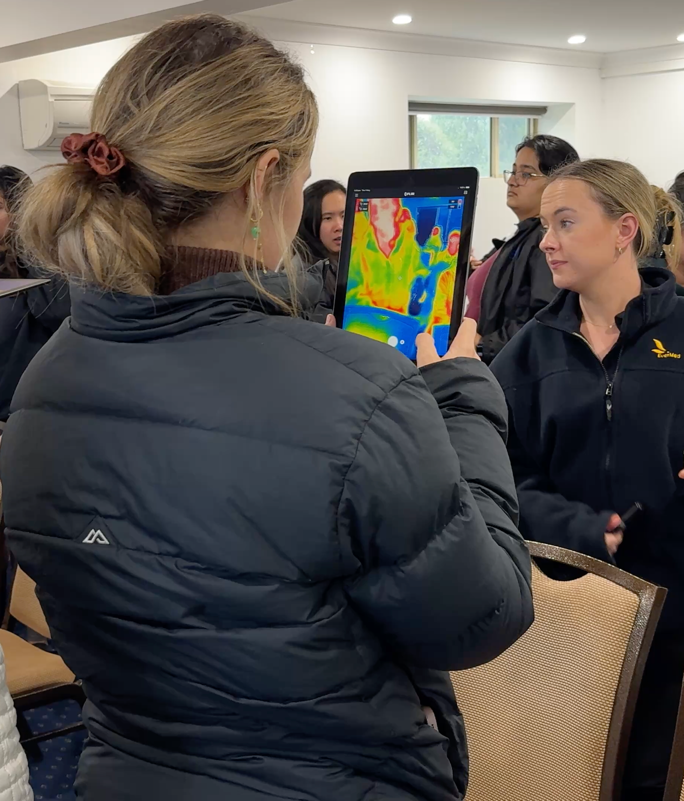
Saskia Everingham demonstrating how to use a thermal imaging camera.
Students experimenting with thermal imaging cameras (NB. Blue Mountains Library has thermal imaging cameras available for loan and they can also be used to identify where cold air is entering your house in winter.)
Lis highlighted how children’s playgrounds, built with artificial surfaces, become dangerously hot in heatwaves, as this thermal photograph indicates: with hot artificial surfaces red and yellow, and grass and shade much cooler as indicated by blue.
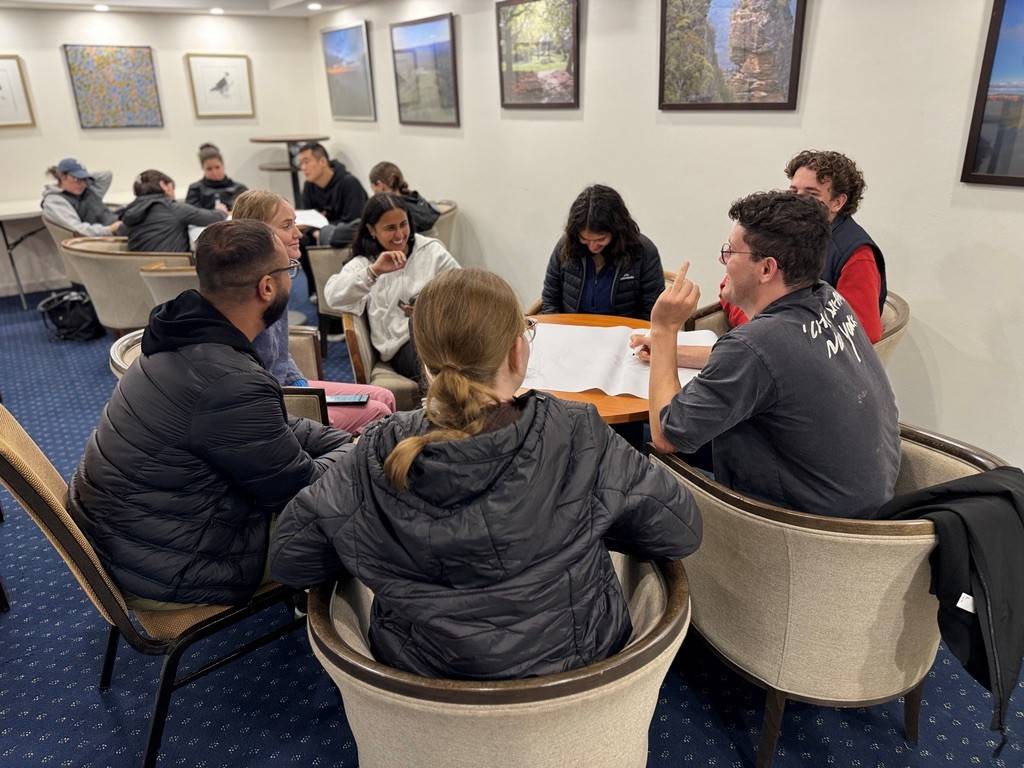
The students broke into groups to address strategies to moderate temperatures both inside and outside the building.
Designing ‘Cooler’ Bus Stops
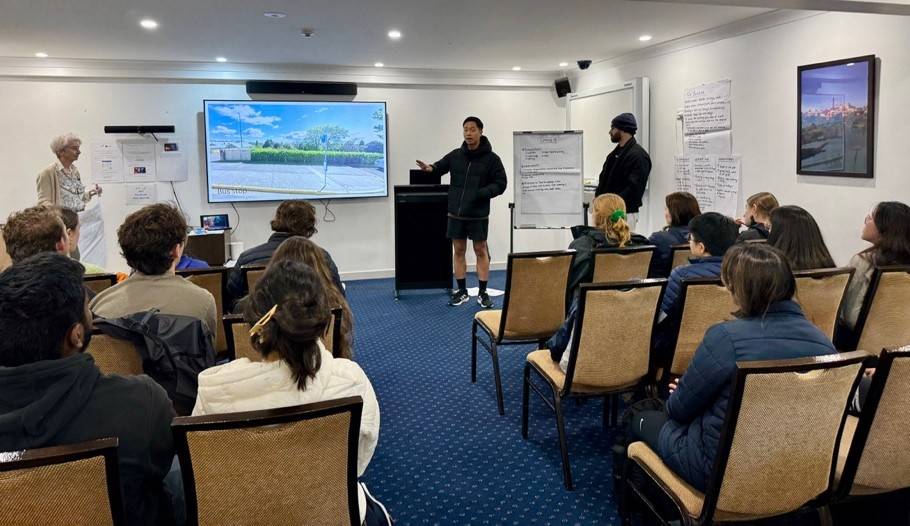
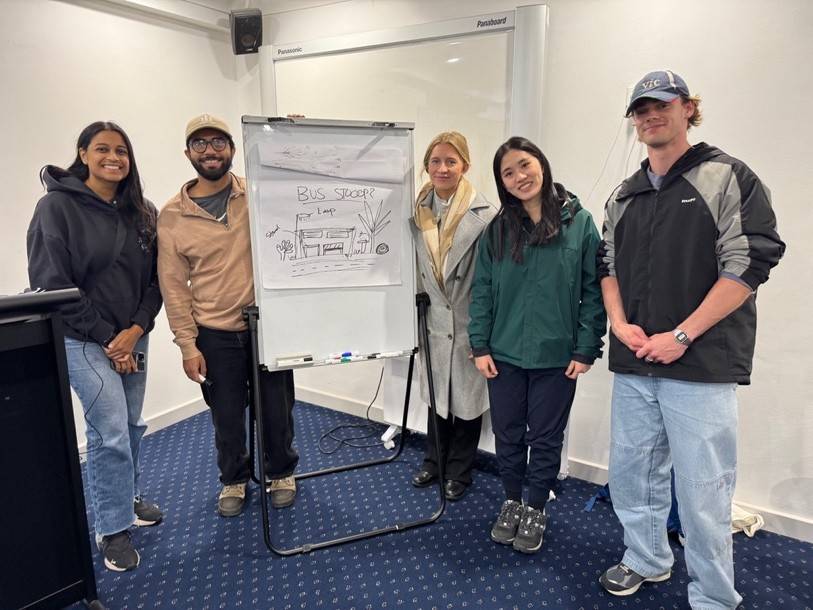
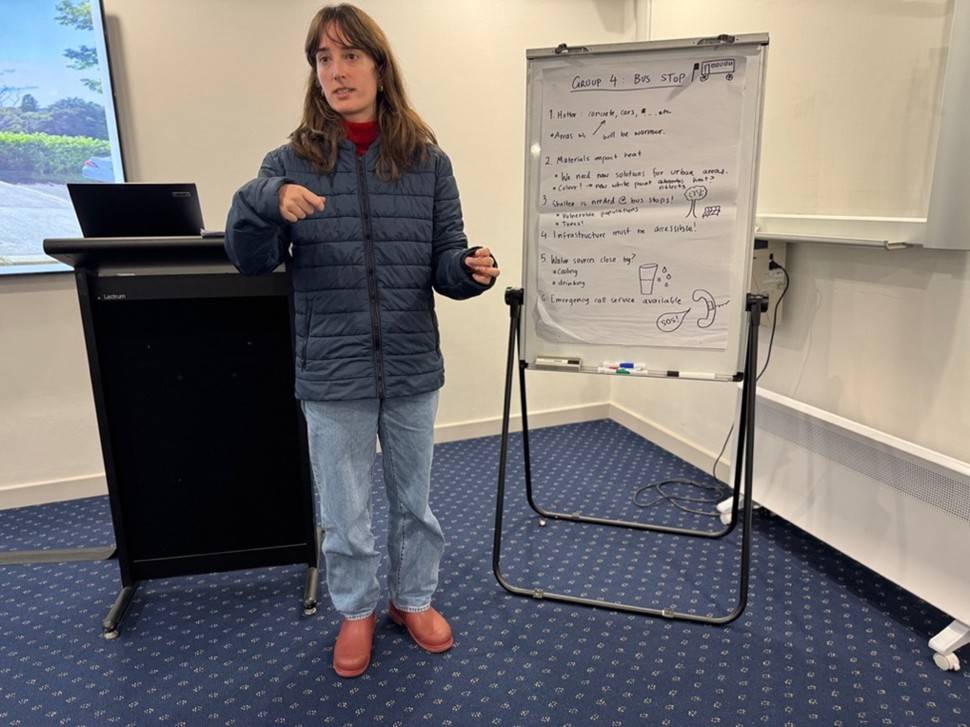
Six groups of students over the two days were given the task of designing a bus shelter for the Planetary Health Centre that would be accessible and provide a safe cool place to wait for public transport during heatwaves.
Discussing the bus stop outside the Planetary Health Centre
The students took this further and considered all weather conditions, coming up with a range of suggestions the Planetary Health Centre now hopes to use to apply for funding to build a bus shelter.
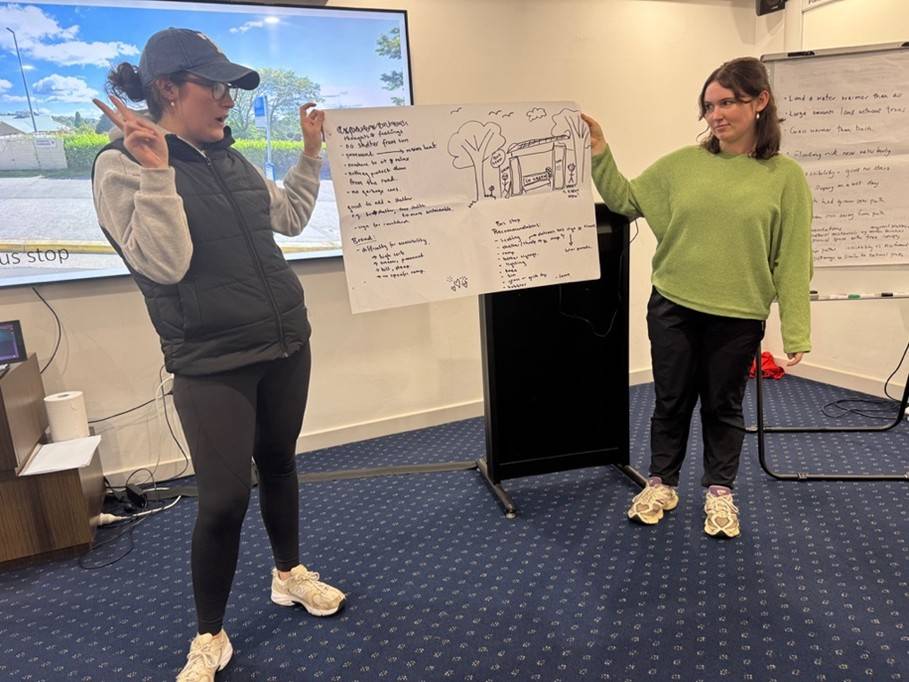
Together they addressed many aspects of what should be considered in designing better bus stops: providing shelter by adding a roof (and even roof garden), with surrounding trees for natural cooling shade, seating, water fountains, walls for protection from wind and rain, solar panels for electronic timetables and lighting to provide security for people waiting at night, emergency call services, information in braille, garbage bins, grassed areas and water for guide dogs, and ramps to improve accessibility.
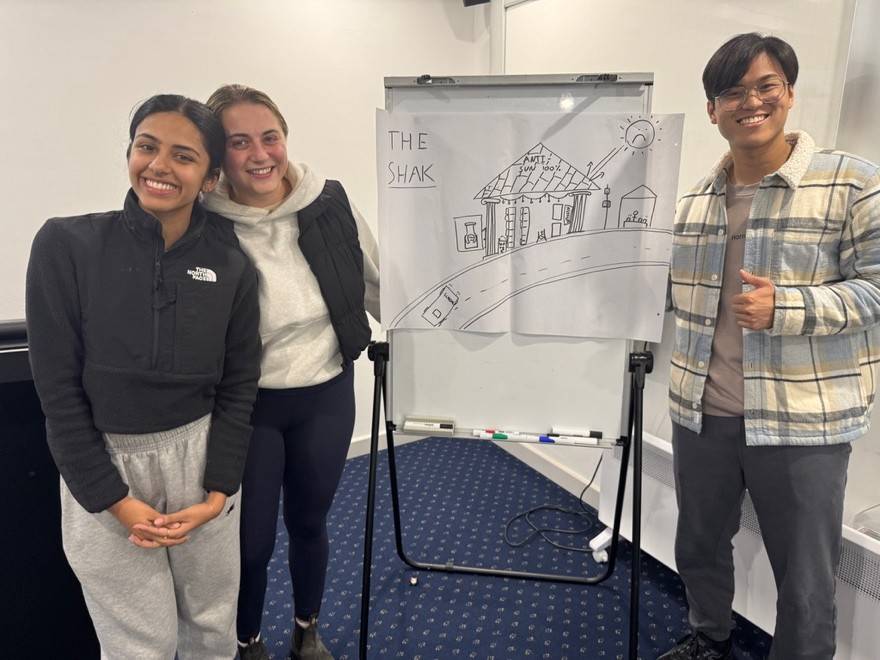
‘The Shak’ could be the ultimate bus stop, a destination in itself!
At the end of the day one group took the concept of ‘cooler’ literally and amused everyone with their design for ‘The Shak’. Made out of recycled timber it included seating using recycled movie theatre seats and recycled sofa beds from Event Cinemas, as well as a Netflix screen to entertain people while waiting. The shelter was covered in solar panels to power the Netflix screen and fairy lights, and a dual electronic bus timetable that would indicate to bus drivers if people were waiting. The shelter also included an accessibility ramp, a water fountain, a bathroom, and a coffee shop!
Join Andris Heks, Yogic Psychotherapist, winner Best Actor, Blue Mountains, for his workshop to laugh as you never laughed before, as part of a movement to globalise people-bonding cheerfulness through kookaburra laughter contagion as an antidote to distressing world divisiveness.
Purchase your ticket here: https://events.humanitix.com/kookaburra-laughter-workshop
View the trailer and the GoFundMe page here: https://www.gofundme.com/f/globalise-unconditional-love-through-kookaburra-laughter
Key event information: - When? 10:15AM - 2:30PM, Sunday 4 October 2026 (1st day of Daylight Saving - 1 hour forward) - Where? Blue Mountains Planetary Health Centre, 33-39 Acacia St, Katoomba, NSW, 2780 - Fee? $60 or what you can afford - Note: please bring your own lunch
What to expect: - Learn how to stay cheerful for good - Learning the funny, human emulated, communal kookaburra laughter and meditation - How communal kookaburra laughter promotes bonding even amongst strangers - The awesome native treasure of the laughing kookaburra phenomenon - Why Kookaburra Yoga is the ‘most excellent of Yogas` - How communal kookaburra laughter contagion boosts the subtle and gross national product - How you could contribute to the kookaburra laughter contagion
This event is supported by Blue Mountains Planetary Health.
Purchase your ticket here: https://events.humanitix.com/kookaburra-laughter-workshop...
Come along to the Planetary Health Centre this Saturday for the next Skill Share Saturdays event!
This weekend`s agenda:
8:30AM - 10AM | Learn how to use your sewing machine class with Sherlie McMillan
8:30AM | Planetary Health Cafe open, serving Good Fat Pastry and Whisk and Pin
9AM - 10AM | Tai Chi and Qigong class with Virginia Field
10AM - 12PM | Learn how to grow WITH the Upper Blue Mountain permaculture workshop with Leni from Alchemy Farms
10AM - 3PM | Fashion Upcycling Workshop with Sherlie McMillan
10:30AM - 12PM | Learn to make focaccia from scratch with Laura Zucchetti (no experience needed)
1:30PM - 4:30PM | Planetary Health Bushcare with Karen Hising
For more information and to purchase a ticket, please visit the website: https://events.humanitix.com/skill-share-saturdays-at-the-planetary-health-centre...
Plate to Planet: Blue Mountains Food Security Fair 2026
📣HEADLINE SPEAKER📣
Our headline speaker is Julian Cribb AM – a renowned Australian science writer, journalist and author who has spent more than 50 years communicating science, agriculture, climate and global sustainability issues. He is the author of several influential books, including The Coming Famine (2010), Food or War (2019) and How to Fix a Broken Planet (2023), which explore the future of food systems, planetary health and humanity`s long-term survival.
He is widely recognised as one of Australia`s leading voices on global food security and sustainable development.
To register for his talk, and view the rest of the program, visit the website: https://events.humanitix.com/blue-mountains-2026-food-security-fair...
At our next Skill Share Saturdays event on Saturday 5th September, join Laura Zucchetti at 10:30am to learn how to make focaccia from scratch!
Come along for a 90 min class where you`ll mix, rest and stretch your own focaccia dough from start to finish, guided every step of the way. You’ll take home your dough to bake on the day in your own oven.
Sign up to this session, and view the other offerings on the day via this link: https://events.humanitix.com/skill-share-saturdays-at-the-planetary-health-centre...
Plate to Planet: Blue Mountains Food Security Fair 2026
We are pleased to announce that the program and registration for Plate to Planet: Blue Mountains Food Security Fair 2026 is now live!
Follow this link to view the program and register your place: https://events.humanitix.com/blue-mountains-2026-food-security-fair
Key information:
When? Saturday 10 October, 9AM - 4PM
Where? Blue Mountains Planetary Health Centre, Katoomba
Who is it for? Families, gardeners, enthusiasts, community groups and businesses, anyone looking to learn about how to be more resilient through local and sustainable food systems.
What to expect? Talks, workshops, demos, market stalls, family activities, music, food
Is there a cost? Entry to the Fair and Markets is free. Talks and workshops are ticketed (both free and paid) and have limited capacity, so please register in advance.
Program highlights:
🌏Headline talk: The age of renewable Food – Julian Cribb AM 🎋Wild edibles foraging workshops – Diego Bonetto, Eat More Weeds 🏞️The importance of bioregions in uncertain times – Rowe Morrow, Permaculture Matters 🥒Home canning and food preservation workshop – Kirsty Berté, Permaculture Hawkesbury Valley 🏡Designing your own Permaculture Property – Leni Nyssen, Alchemy Farms 🍃Utilising what’s in front of you – Uncle Lex, The Ganya Shed 🪱How to worm farm - BMCC 🎸Live music by Olivia Dustmann 🌾Community crop and seed swap
Tickets are limited so please register your place now: https://events.humanitix.com/blue-mountains-2026-food-security-fair
We are also seeking stallholders for the event. If you are a grower, retailer, community organisation or business that would like to get involved, please reach out to [email protected]!...
Thank you to everyone that joined us at the Planetary Health Centre on Saturday for the first of our Skill Share Saturdays program!
The Centre was a hive of activity all day, and we heard from @alchemyfarms_permaculture, the @ediblegardentrailbluemountains team and Andy Mann. Also thanks to Sherlie McMillan from Greater Blue Mountains Rotary for teaching the Fashion Upcycling workshop, and Virginia Field for the Tai Chi and Qigong class.
The next event will be held on Saturday 1st August - you can register your place here: https://events.humanitix.com/skill-share-saturdays-at-the-planetary-health-centre
🖐Get involved!
Do you have a skill, program or interest that promotes planetary health that you`d be willing to share with members of the local community? We are looking for more workshop and session hosts for our future events.
Join us at the Planetary Health Centre in Katoomba on the first Saturday of every month for Skill Share Saturdays!
Our July program includes: - What to grow in a Blue Mountains climate - Eating for Earth - Tai Chi and Qigong - Fashion upcycling and clothing reuse workshop - How to get involved with the Edible Garden Trail
You are also welcome to bring any surplus seeds or produce for our Crop Swap, or wind down in the Planetary Health Cafe (until 2pm).
If you have a skill that you want to share, or any questions or queries, please contact [email protected]
Visit the website to view the full program of events and register your place.
Join Andy Mann, a 23 year old Lawson local, for their Eating for Earth session 🌏
Eating for Earth is a judgement-free plant-based educational workshop that all types of eaters are encouraged to attend. There will be a presentation about the environmental impact of diets, a discussion section, and best of all, food! The food will be fully plant-based.
Andy wants to help inform our passionate community about how we can better reduce dietary environmental impact.
The session will run from 11AM - 12PM on Saturday 4th July.
Other sessions include: - What to grow in a Blue Mountains Climate - Fashion Upcycling - Tai Chi and Qigong - Bushcare on the Planetary Health site - How to get involved with the Edible Garden Trail
To register your place, visit our website: https://events.humanitix.com/skill-share-saturdays-at-the-planetary-health-centre...
We’re excited to announce the second Blue Mountains Food Security Fair, taking place in Katoomba in October 2026.
This annual event will bring together growers, thinkers, makers, and community members to explore one of the most important challenges of our time: how we grow, share, and sustain food in a changing world.
Across the weekend, we’ll be exploring themes including: - Healthy soil and regenerative systems - Food and human health - Plant-based food futures - Home and community food resilience - Water-sensitive and climate-adapted growing - Indigenous food knowledge and systems - School food systems - Australia’s food procurement - Global food security challenges Expect a dynamic program of inspiring speakers, practical workshops, and hands-on experiences designed to leave you informed, empowered, and connected.
Key information Date: Weekend of 10th October 2026 Location: Blue Mountains Planetary Health Centre, Katoomba, NSW We’ll be announcing speakers and program details soon.
We are also inviting expressions of interest from individuals and organisations who would like to contribute to the program, host workshops, run a stall or partner with us.
Do you struggle making the most of your veggie garden all year round?
Join Leni from @alchemyfarms_permaculture on Saturday 4th July for her Permaculture Workshop: Learn how to grow WITH the Upper Blue Mountains seasons, rather than battling against them.
During the two-hour session, you`ll cover crop selection for different seasons, what to grow from seeds vs seedlings, frost and wind protection, and nurturing your soil with a seasonal cycle.
Register for this and other sessions as part of our Skill Share Saturdays program via this link: https://events.humanitix.com/skill-share-saturdays-at-the-planetary-health-centre...
From Saturday 4 July, we are opening up the Planetary Health Centre for our monthly Skill Share Saturdays program: https://events.humanitix.com/skill-share-saturdays-at-the-planetary-health-centre
Throughout each day, you can expect to find a variety of sessions focused on restoring the health of the planet, in terms of the environment, community and economy.
Sessions at the first event include:
- What to grow in a Blue Mountains climate - Plant-based eating - Tai Chi and Qigong - Fashion Upcycling and clothing reuse workshop
You are also welcome to bring any surplus seeds or produce for our Crop Swap, or wind down in the Planetary Health Cafe (until 2pm).
Visit the website to view the full program of events and register your place: https://events.humanitix.com/skill-share-saturdays-at-the-planetary-health-centre
Registrations essential.
We are also inviting expressions of interest from individuals and organisations who would like to contribute to the program - please reach out to [email protected] if you are interested!...
In Katoomba, a grassroots litter-picking group tackles rubbish before it reaches our water supply. Their story shows how local environmental action, fueled by community connection, can drive meaningful change for planetary health.
Support the Future of Solutions-Focused Neighbourhood News